.jpg)
Most B2C lead generation advice reads the same way: post more on social, write more content, run more ads. None of it explains why two businesses can run the identical playbook and get completely different results.
The difference usually isn't the strategy. It's execution, and one overlooked detail that has nothing to do with creativity: whether the leads you're capturing are even reachable in the first place.
This guide walks through the strategies that consistently work for consumer-facing businesses in 2026, what makes B2C lead gen different from B2B, and the one step most guides skip that determines whether any of these tactics actually convert into revenue.
What Is B2C Lead Generation?
B2C (business-to-consumer) lead generation is the process of attracting individual consumers and capturing their contact information, usually an email address, phone number, or social handle, so a business can follow up and convert them into paying customers.
Unlike B2B, where a single sale might involve five decision-makers and a three-month evaluation cycle, B2C decisions are fast, often emotional, and driven by immediate value: a discount, a useful piece of content, a problem solved right now.
That difference shapes everything about how B2C lead gen should work:
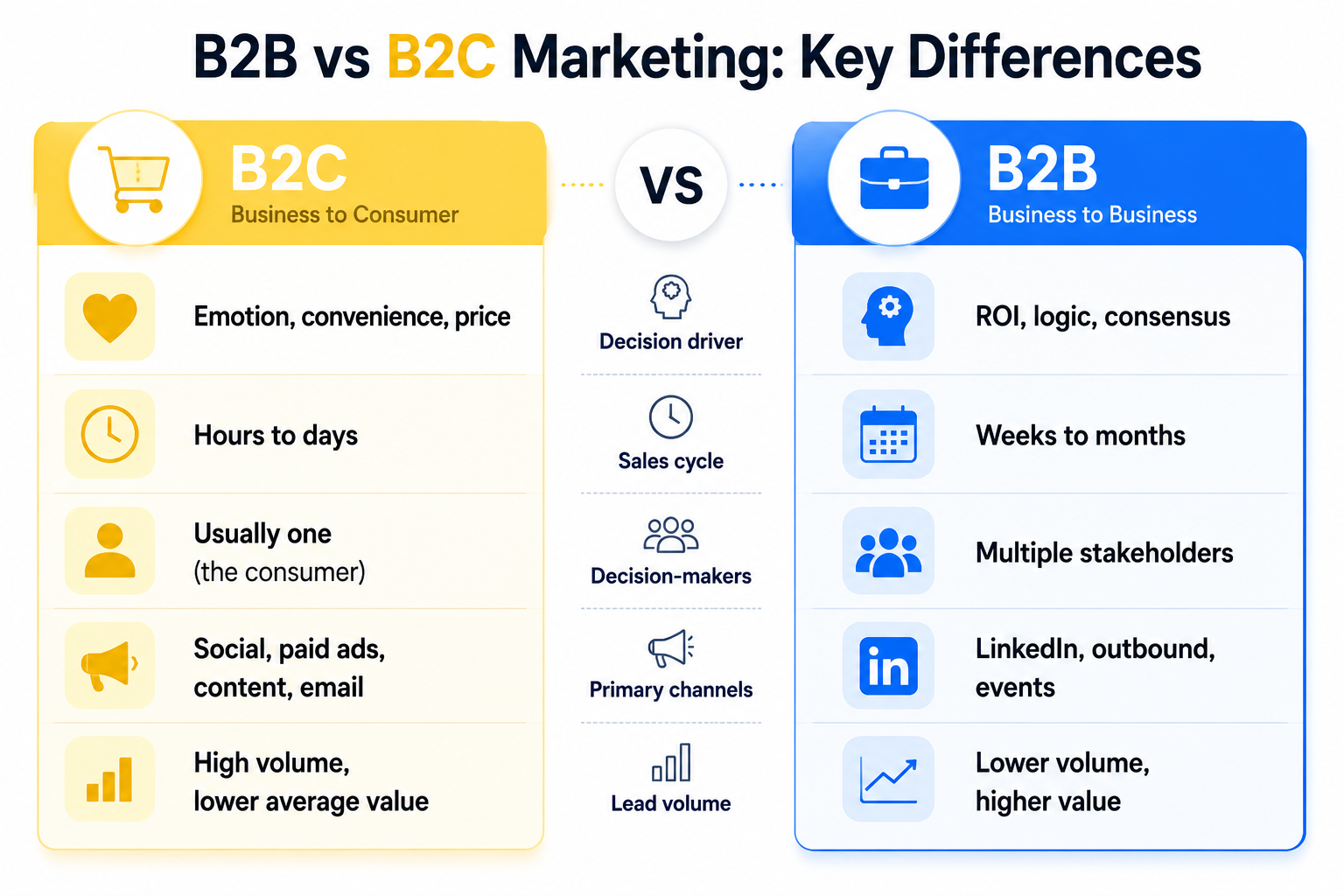
Because B2C buyers move fast and don't appreciate being chased, the strategies that work best are inbound by nature: you earn attention and let the consumer come to you, rather than cold-calling your way to a sale.
1. Build Content Around Buyer Intent, Not Just Keywords
Content marketing remains one of the most cost-effective ways to generate B2C leads, but only when it's mapped to what your audience is actually trying to solve at each stage of their journey.
A skincare brand shouldn't just publish "10 Skincare Tips." It should publish "5 Ingredients to Avoid If You Have Sensitive Skin," because that's the specific question a high-intent buyer is typing into Google. The closer your content matches a real search intent, the more naturally it pulls in leads who are ready to engage.
What works:
- Blog posts and guides that answer specific, narrow questions
- Comparison and "best of" content for products in consideration
- Downloadable checklists, templates, or calculators as lead magnets
2. Turn Social Media Into a Two-Way Conversation
Consumers scroll far more than they search, which makes platforms like Instagram, TikTok, and Facebook essential for B2C visibility. But the businesses generating real leads from social aren't just posting promotional content. They're engaging directly: answering comments, responding to DMs, and building the kind of trust that makes someone comfortable handing over their email address later.
Mix three content types consistently, roughly in this order of frequency: educational (how your product solves a problem), entertaining (relatable, shareable), and promotional (offers, launches).
3. Use Paid Social and Search Ads to Accelerate Reach
Organic content builds trust over months. Paid ads buy you speed. A well-targeted Facebook, Instagram, or Google ad campaign puts your offer directly in front of people who match your ideal customer profile, with a clear call to action to start the lead capture process, usually a discount code, free trial, or gated resource in exchange for an email.
The key isn't the platform, it's the targeting: narrow audiences based on interest, behavior, and lookalike data convert at a much higher rate than broad reach campaigns.
4. Invest in SEO for Compounding, Long-Term Leads
Paid ads stop generating leads the moment you stop paying. SEO keeps working long after you've published. Ranking for the searches your customers are already making, including product comparisons, "how to" guides, and problem-aware queries, builds a lead pipeline that gets cheaper per lead over time, not more expensive.
This is also where a clean technical foundation matters: fast load times, mobile-friendly design, and clear calls-to-action on every page that ranks, so organic traffic actually converts into captured leads instead of just pageviews.
5. Use Lead Magnets People Actually Want
A lead magnet is only as good as its perceived value. Generic "subscribe to our newsletter" forms convert poorly because there's no real incentive. Stronger options include:
- Quizzes ("Which skincare routine fits your skin type?")
- Discount codes for first-time buyers
- Free guides or templates solving a specific problem
- Early access to new products or sales
The exchange has to feel fair: give something genuinely useful, ask for contact details in return.
6. Make Email Marketing the Backbone of Your Nurture Strategy
Email remains one of the highest-ROI channels in B2C marketing, but only when the list behind it is healthy. This is where most lead generation guides stop short, because capturing an email address is only step one. What happens after the capture is where most B2C lead gen programs quietly fail.
Here's the part that rarely gets mentioned: every signup form, quiz, and discount popup you run is also collecting typos, fake addresses, and disposable emails alongside your real leads. Left unchecked, that bad data does three things:
- Inflates your bounce rate, which damages sender reputation with mailbox providers like Gmail and Outlook
- Skews your conversion metrics, making it look like a campaign underperformed when the real issue was undeliverable contacts
- Gets your future emails routed to spam, including the ones going to your genuinely interested leads
The fix is straightforward: verify new leads at the point of capture, and clean your existing list before any major campaign. Email list cleaning strips out invalid, risky, and inactive addresses before they can hurt deliverability, and running new signups through real-time validation catches bad data before it ever reaches your database. If you want the full picture on why this matters, this guide to reducing bounce rates through list hygiene breaks down exactly how sender reputation works.
In short: every other strategy on this list earns the lead. This one decides whether you can actually reach them.
7. Build a Referral Program Around Your Happiest Customers
Consumers trust other consumers more than they trust your ads. A referral program built on a simple exchange (give a discount, get a discount) turns your existing customer base into a low-cost acquisition channel. It works especially well in B2C because the purchase decision is personal and easy to recommend casually ("you should try this, here's a code").
Keep the incentive symmetrical (both parties benefit) and the mechanism simple: a unique link or code is enough. Don't overcomplicate it with tiers or thresholds unless your average order value justifies it.
8. Add Chatbots for Instant, Low-Friction Engagement
Many consumers hesitate to fill out a contact form but will happily answer a few quick questions in a chat window. A simple chatbot that asks 2-3 qualifying questions and offers an instant answer or relevant offer can capture leads from visitors who would otherwise bounce without converting.
This works best for straightforward use cases, such as product recommendations, FAQ-style queries, or directing visitors to the right page. It's not a replacement for human support on anything complex.
9. Partner With Micro-Influencers for Targeted Trust
You don't need a celebrity endorsement to generate leads through influencer marketing. Micro-influencers, creators with smaller but highly engaged, niche audiences, often convert better per dollar because their followers trust their recommendations more genuinely.
Look for creators whose audience demographic matches your ideal customer, not just follower count, and structure the partnership around a trackable offer (a unique discount code or link) so you can measure actual lead generation, not just impressions.
10. Retarget Visitors Who Didn't Convert the First Time
Most visitors won't become a lead on their first visit. Industry estimates consistently put first-visit conversion intent very low across most B2C categories. Retargeting ads remind people who've already shown interest (viewed a product, started a signup, abandoned a cart) to come back and complete the action.
Two practical rules: exclude anyone who already converted from your retargeting audience, and refresh your ad creative regularly. The same retargeting ad shown for months loses effectiveness fast.
The Mistake That Undermines All of These Strategies
You can execute every strategy on this list well and still see disappointing results if the leads you capture were never reachable to begin with. A signup form that collects a mistyped email, a quiz that gets completed with a throwaway address, or a cold list purchased from a third party will all show up as "leads" in your CRM, right up until your welcome email bounces and that lead is gone for good.
Before scaling any of the channels above, it's worth checking the health of the list you already have. no2bounce's email verification tool checks new and existing contacts in real time, including notoriously hard-to-catch catch-all addresses, so the leads your marketing team works so hard to generate are actually ones you can reach.
How to Choose the Right Mix for Your Business
Not every strategy deserves equal investment from day one. A practical way to prioritize:
- Start with one organic channel (content or social) that matches where your audience already spends time
- Layer in one paid channel to accelerate volume while the organic channel builds momentum
- Treat email as the connective tissue: every other channel should be funneling leads into a nurture sequence, not just collecting them
- Add referral and retargeting once you have customers and traffic to work with
Trying to run all ten strategies simultaneously with a small team usually produces mediocre results across the board. Two or three executed well will outperform ten executed half-heartedly.
FAQs
What's the difference between a lead and a prospect in B2C?
A lead has shown initial interest, such as signing up for a discount or downloading a guide. A prospect is further along the funnel, actively comparing options or close to purchasing.
How long does it take to see results from B2C lead generation?
Paid channels can produce leads within days. Content and SEO typically take a few months to build meaningful momentum, but the leads they generate tend to be cheaper and more sustained over time.
Is email marketing still effective for B2C lead generation?
Yes. Email consistently ranks among the highest-ROI channels in B2C marketing, provided the list is kept clean. A neglected list with high bounce rates will undermine deliverability for every other email strategy you run.
Do I need a big budget to generate B2C leads?
No. Organic content, social engagement, and referral programs can generate leads with minimal spend. The budget mainly accelerates volume and speed, not whether the strategies work at all.
Start cleaning your list instantly.
No credit card required.